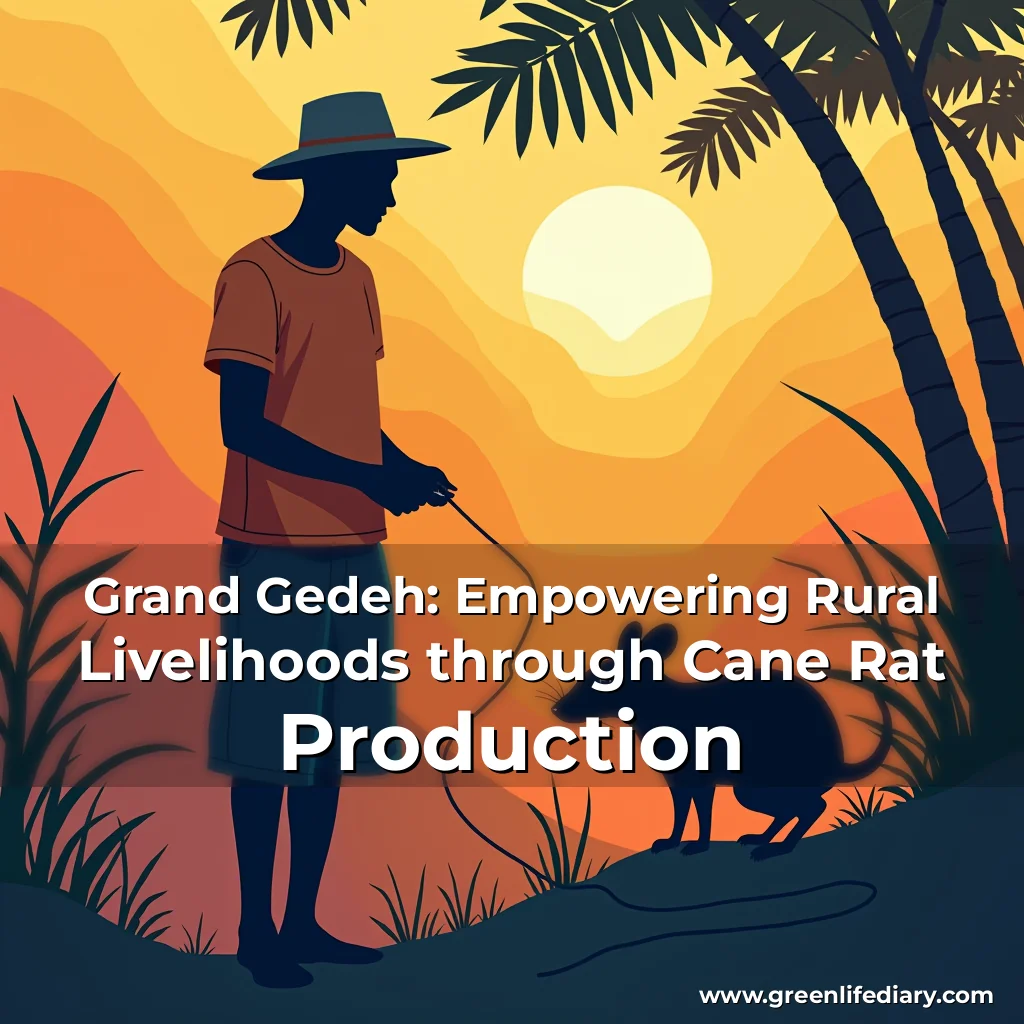
The Forestry Training Institute (FTI) has partnered with the European Union-funded Leh Go Green project to introduce rural communities in Grand Gedeh County to the benefits of cane rat production.
- Training Targeted Selected Community Members
- Introduction to Core Techniques in Cane Rat Rearing
- Reducing Pressure on Forest Biodiversity
- Empowering Rural Livelihoods
A total of six participants, comprising three men and three women, were selected from Boundary and Ziah Towns for a two-day training session at the Grand Gedeh Community College. The training aimed to equip these rural households with the skills and knowledge necessary to establish and manage cane rat farms, providing a reliable source of protein and income. The initiative is part of the Leh Go Green project’s broader strategy to reduce communities’ dependence on bushmeat and promote sustainable livelihoods. By introducing alternative protein sources like cane rat farming, the project seeks to protect the region’s biodiversity-rich forests while creating sustainable income-generating opportunities for local families. The training sessions were facilitated by FTI Production Officers, Mr. D. Kingdom Grear and Mr. Jonathan Glee, who emphasized the importance of transitioning away from unsustainable practices such as hunting. They highlighted the benefits of cane rat farming, including its minimal investment requirements, adaptability to local conditions, and quick returns on investment.
| Key Benefits of Cane Rat Farming | ||
|---|---|---|
| Minimal Investment Requirements | Adaptable to Local Conditions | Quick Returns on Investment |
| Reduced Reliance on Wild Meat | Improved Household Nutrition | Sustainable Livelihoods |
The training covered the full production cycle, from pen construction to breeding and disease control. Participants were empowered with the knowledge and skills necessary to establish and sustain their farms, ensuring a reliable source of protein and income for their families. “Cane rat farming is one of the most sustainable small livestock ventures available to rural farmers. It offers a reliable source of protein and income, while reducing the pressure on our forest ecosystems. We are committed to supporting our communities in their transition to sustainable livelihoods,” said Mr. Grear. The training also highlighted the importance of community engagement and participation. Participants expressed enthusiasm for the training and pledged to apply the knowledge within their communities, supported by continued supervision from the Leh Go Green team. Many voiced optimism about improving household nutrition and moving away from forest hunting.
“Leh Go Green continues to deliver impactful, community-driven interventions that promote environmental conservation while advancing economic empowerment. This training marks a vital step toward enhancing food security, safeguarding forest resources, and fostering sustainable development in Grand Gedeh County,” said Mr. Dongbo, Leh Go Green Project Officer.
You Might Also Enjoy: The Silent Crisis Beneath Our Feet: Understanding Plastic Pollution's Hidden Impact
The Leh Go Green project, managed by the United Nations Development Programme (UNDP) in partnership with the Forestry Development Authority (FDA), aims to promote environmental conservation and economic empowerment in rural communities. This training is just one example of the project’s commitment to delivering impactful, community-driven interventions that promote sustainable development and food security.
Empowering Rural Livelihoods through Cane Rat Production
The training is part of a broader effort to promote sustainable livelihoods in Grand Gedeh County. By introducing alternative protein sources like cane rat farming, the Leh Go Green project seeks to reduce the pressure on the region’s biodiversity-rich forests while creating sustainable income-generating opportunities for local families. The training has the potential to empower rural households with the skills and knowledge necessary to establish and manage cane rat farms, providing a reliable source of protein and income. This, in turn, can help to improve household nutrition and reduce the reliance on wild meat. Key Takeaways
- Cane rat farming offers a reliable source of protein and income, while reducing the pressure on forest ecosystems.
- Minimal investment requirements and adaptability to local conditions make cane rat farming an attractive option for rural farmers.
- Community engagement and participation are crucial for the success of cane rat farming initiatives.
By empowering rural households with the skills and knowledge necessary to establish and manage cane rat farms, the Leh Go Green project is promoting sustainable livelihoods and reducing the pressure on the region’s biodiversity-rich forests. This training marks a vital step toward enhancing food security, safeguarding forest resources, and fostering sustainable development in Grand Gedeh County.

news is a contributor at Green Life Diary. We are committed to providing well-researched, accurate, and valuable content to our readers.