
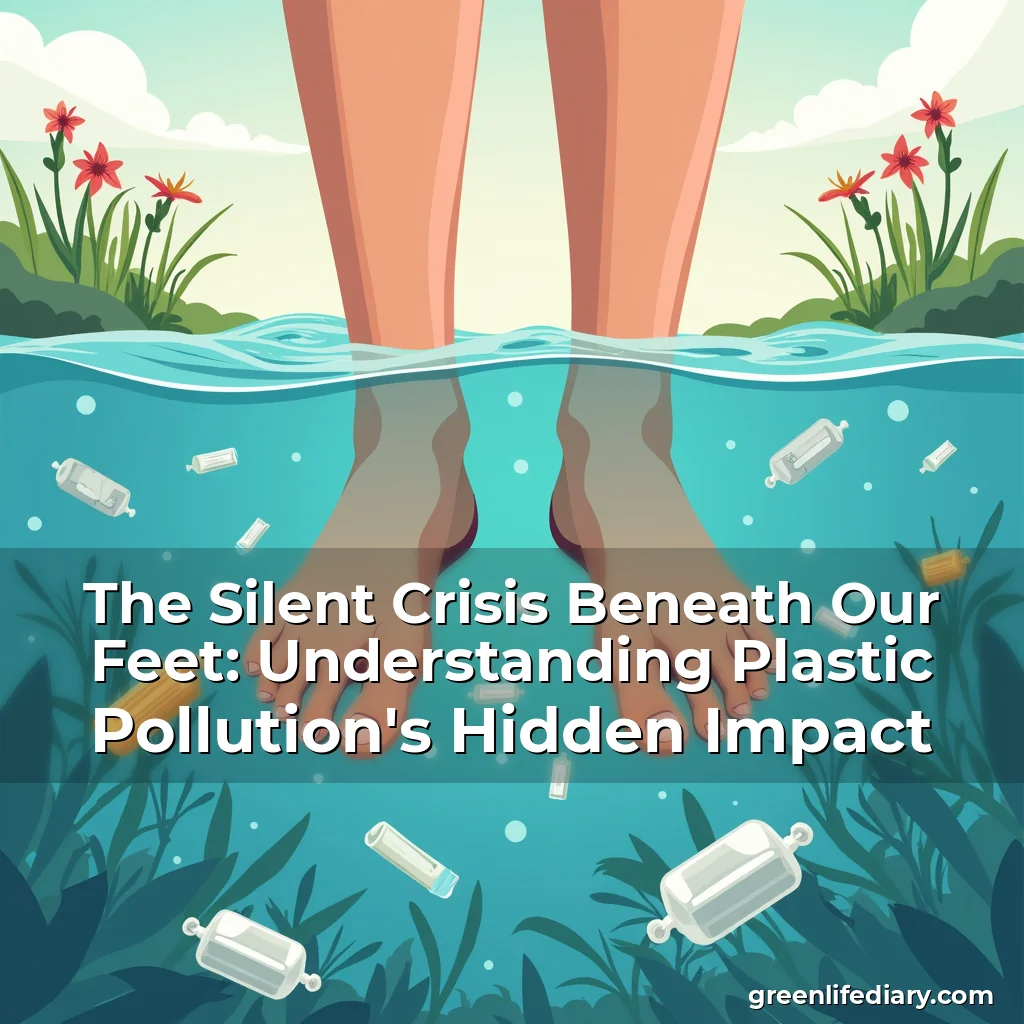
The Silent Crisis Beneath Our Feet: Understanding Plastic Pollution’s Hidden Impact
In an age where convenience often trumps caution, plastic has woven itself into every aspect of modern life. From food packaging to medical devices, its versatility is undeniable—but so too are the consequences of our reliance.
The environmental toll of plastic waste extends far beyond what meets the eye, touching ecosystems in ways that challenge even the most optimistic outlooks on human progress.
The Invisible Web of Microplastics
A single bottle of water can contain up to 94 pieces of microplastics—tiny fragments less than five millimeters long that infiltrate nearly every corner of the planet.
These microscopic invaders originate from various sources, including the breakdown of larger plastics, synthetic fibers released during laundry cycles, and industrial processes involving abrasives.
Microplastics have been found in:
- Oceanic depths exceeding 11,000 meters
- Polar ice caps and glacial meltwater
- Even the air we breathe in urban environments
- Human bloodstreams through ingestion and inhalation
Researchers estimate that over 8 million tons of plastic enter the oceans annually, creating vast garbage patches such as the Great Pacific Garbage Patch, which spans approximately 1.6 million square kilometers.
This accumulation not only threatens marine biodiversity but also disrupts entire food chains by concentrating toxins within organisms at higher trophic levels.
The Lifecycle of Plastics: A Journey Through Time
Plastics begin their journey as raw materials extracted primarily from petroleum and natural gas reserves, undergoing complex chemical transformations before becoming consumer products.
The production phase involves polymerization reactions under high temperatures and pressures, resulting in versatile materials ranging from rigid polyethylene terephthalate (PET) used in bottles to flexible polyvinyl chloride (PVC) found in construction materials.
Post-consumer use sees these materials distributed across industries, with estimates suggesting global annual consumption exceeds 400 million tons, highlighting both the demand and the waste dilemma.
Once discarded, plastics either end up in landfills, incinerators, or, alarmingly, unregulated disposal sites contributing significantly to environmental degradation.
Ecological Consequences: Beyond Marine Life
While oceanic pollution garners much attention, terrestrial ecosystems suffer equally severe impacts from plastic waste.
Wildlife encounters with plastics lead to entanglement, suffocation, and internal injuries when ingested, affecting species from seabirds to large mammals.
For instance, sea turtles frequently mistake plastic bags for jellyfish, leading to fatal blockages in their digestive systems.
Studies show that over 90% of seabirds now have plastic in their stomachs, illustrating how deeply entrenched this issue has become in marine environments.
Beyond direct harm, microplastics act as vectors for persistent organic pollutants (POPs), facilitating bioaccumulation along ecological pathways.
This means that contaminants initially present in the environment bind to microplastics, then transfer through the food web, ultimately reaching apex predators—including humans—with potentially harmful effects.
Economic Implications: The Cost of Convenience
The economic burden of plastic pollution manifests in several sectors, notably tourism, fisheries, and public health care systems.
Clean-up efforts alone cost governments millions annually, while beachfront communities lose revenue due to decreased visitor numbers linked to visible littering.
Fisheries face losses from contaminated stocks, impacting livelihoods and food security globally, particularly in developing nations reliant on seafood exports.
Public health costs include treatment expenses related to microplastic-related illnesses and increased healthcare demands stemming from polluted environments.
Estimates suggest that the global economy loses billions each year due to these combined factors, underscoring the need for systemic change rather than piecemeal solutions.
Sustainable Alternatives: Pioneering Solutions
As awareness grows, innovative alternatives to conventional plastics emerge, offering viable paths toward reducing dependency on non-biodegradable materials.
Biodegradable polymers derived from plant-based resources provide promising substitutes without compromising functionality or durability.
Companies pioneering compostable packaging solutions demonstrate that sustainable options can coexist alongside traditional manufacturing methods.
Moreover, advancements in recycling technologies enable greater recovery rates of post-consumer plastics, minimizing landfill contributions and resource depletion.
Initiatives promoting circular economies emphasize reuse strategies, encouraging consumers to adopt habits that extend product lifecycles and reduce overall consumption.
Collaborative projects between academia and industry drive research into new material compositions that degrade safely in natural settings.
Policy Frameworks: Global Efforts Against Plastic Waste
Nations worldwide recognize the urgency of addressing plastic pollution through legislative measures aimed at curbing excessive usage and improving waste management infrastructure.
International agreements such as the United Nations Environment Programme’s resolutions set targets for reducing single-use plastics and enhancing recycling capabilities globally.
Mandatory regulations requiring extended producer responsibility (EPR) place accountability squarely on manufacturers, incentivizing eco-friendly design practices.
Some countries implement bans on specific items like plastic straws and shopping bags, aiming to decrease everyday disposable plastic consumption substantially.
Urban centers experiment with deposit-return schemes for beverage containers, successfully increasing recycling rates and decreasing littering incidents.
Non-governmental organizations collaborate with policymakers to draft legislation that balances economic interests with environmental stewardship principles effectively.
Consumer Awareness Campaigns: Empowering Individual Action
Raising consciousness among individuals remains crucial in combating plastic pollution, necessitating targeted educational initiatives tailored for diverse demographics.
Community-led clean-up drives foster local engagement while simultaneously mitigating immediate environmental damage caused by accumulated trash.
School programs integrate lessons on sustainability early in education, cultivating responsible behaviors from childhood development stages onward.
Digital platforms leverage social media campaigns to disseminate information widely, using influencers and viral challenges to promote behavioral shifts towards zero-waste living.
Local businesses adopt transparent labeling policies disclosing plastic content percentages in their offerings, enabling informed purchasing decisions by discerning customers.
Workplace wellness programs incorporate discussions around personal impact assessments regarding daily plastic consumption patterns.
Technological Innovations: Redefining Material Science
Advancements in nanotechnology offer novel approaches to managing existing plastic waste streams efficiently without relying solely on mechanical separation techniques.
Scientists develop enzymatic treatments capable of degrading polyethylene—a previously considered indestructible material—at accelerated rates under controlled conditions.
Engineered bioplastics utilizing genetically modified bacteria produce fully decomposable films suitable for agricultural applications without leaving behind toxic residues.
Smart sensors embedded within packaging materials alert users when contents spoil, thereby reducing unnecessary discards tied to expiration dates misinterpretations.
Data analytics tools help track global plastic flows in real time, identifying hotspots prone to contamination risks allowing proactive interventions before crises escalate further.
Automation enhances sorting facilities’ efficiency dramatically, distinguishing recyclables accurately amidst mixed refuse loads arriving continuously at processing plants nationwide.
Global Collaboration: Strengthening International Ties
Addressing transboundary issues like ocean currents carrying debris across international waters requires cooperative frameworks binding participating states together legally.
Treaties establishing shared responsibilities ensure equitable distribution of cleanup burdens based upon historical contribution levels rather than arbitrary geographical divisions.
Joint ventures fund cross-border scientific studies examining microplastic migration routes, providing empirical evidence essential for crafting effective mitigation plans collaboratively.
Regional alliances facilitate knowledge exchange concerning best practices implemented elsewhere successfully against similar threats facing member nations jointly.
Capacity-building programs assist economically disadvantaged regions gain access to advanced waste treatment technologies they might otherwise lack sufficient funding to acquire independently.
Transparency mechanisms guarantee compliance monitoring regimes operate fairly ensuring all stakeholders adhere strictly according to agreed protocols consistently over time periods specified beforehand.
Future Outlook: Charting a Path Toward Sustainability
Despite daunting challenges ahead, emerging trends indicate growing momentum behind collective action focused specifically on eliminating plastic dependence gradually yet systematically.
Youth movements advocating radical changes prioritize systemic reform over incremental adjustments, pushing political agendas forward forcefully demanding urgent policy revisions.
Investment flows increasingly favor startups experimenting with closed-loop systems where outputs serve as inputs perpetually sustaining operations indefinitely without external dependencies.
Corporate commitments shift visibly toward measurable goals aligned closely with planetary boundaries outlined clearly within scientific consensus documents published regularly by authoritative bodies.
Educational institutions expand curriculum modules covering topics relevant exclusively to understanding contemporary environmental dilemmas better equipped future leaders handle them confidently later once assumed positions of influence naturally.
Collective bargaining units negotiate contracts incorporating clauses mandating suppliers meet stringent sustainability criteria thereby indirectly influencing broader supply chain dynamics positively overall beneficially society wide scale.
Conclusion
The pervasive nature of plastic pollution demands multifaceted responses integrating technological innovation, regulatory oversight, community involvement, and individual responsibility seamlessly interwoven together harmoniously.
By adopting holistic perspectives acknowledging interconnectedness between human activities and ecological balance, humanity stands poised to forge resilient futures grounded firmly upon principles prioritizing regeneration above extraction relentlessly pursued historically until recently.

news is a contributor at Green Life Diary. We are committed to providing well-researched, accurate, and valuable content to our readers.


